
 |
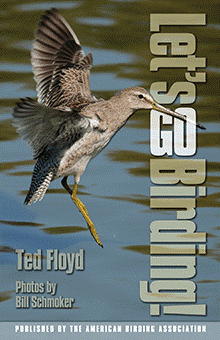
If you suddenly decided to take up golf or tennis, you’d be wise to seek instruction to ensure that your swing was progressing properly to fully develop your game and enjoy the sport. Birding is no different. A little instruction and wisdom can enhance your skills and make the sport more rewarding. Ted Floyd’s free downloadable book, Let’s Go Birding, is just the place to start.
This 36-page gem will help teach you how to identify birds. Even better, it will foster an appreciation for birds. It’s designed for novices, but veteran birds will find the emphasis on appreciation – getting to know even common birds – it’s a good refresher.
I was startled when Floyd, who was the editor of the American Birding Association’s flagship publication, Birding, for 15 years, started readers with a request to put down their binocular and field guide and just go outside and look at birds with the naked eye. What? How will anyone learn to identify birds without these two essential tools? This is when I started to appreciate that we readers were in the hands of a Zen master, of birding.
With this counterintuitive recommendation, Floyd nurtures a mindset necessary to recognize field marks and also absorb the bird’s essence, an important step toward a wholistic approach to identification and appreciation. Yes, identification requires discerning wing stripes, bill shapes and plumage patterns. But, it’s also behavior, vocalizations and habitats. Floyd, riffing off guidance from fellow birder Ted Eubanks, describes this as bare-naked birding – what you can see without the benefit of your binocular.
There is method to this madness: Bare-naked birding gives context and perspective that complements the field marks we recognize with the benefit of binoculars and a bird book. It’s something seasoned birders probably do subconsciously, but a behavior we may not remember to share with novices.
Floyd’s encouragement for “patchwork” birding, the repeated coverage of the same patch of habitat, resonated with me. I relish birding the same places over and over again, learning the daily rhythms of local birds. Patchwork birding refines field observation skills and attunes observers to the seasonal variations that make birding such a rich pastime.
Floyd caught me red-handed on one of my bad habits – not tracking birds when they fly. It happens all the time. I see a perched bird, identify it, and when it flies off, I lower my binocular. By doing this, I miss the opportunity to sharpen my flying bird identification skills. And next time, I might not see it perched – seeing it fly is all I might get. I’ll do better.
The book opens with the American Birding Association Code of Birding Ethics, an essential and often overlooked foundation on which all birders should ignite their passion. It’s akin to teaching first-time golfers not to talk while someone is in mid-swing. Without these ethics, birders and birds have a bleaker future.
So who will benefit from this guide? Certainly novices and intermediate birders. Field trip leaders and those who mentor beginners will appreciate the logical progressive approach to bird appreciation. I encourage you to read it yourself, and then share it with a friend. We’ll all be better birders if you do.
Review by Peter Stangel
Let’s Go Birding is free and downloadable at https://www.aba.org/lets-go-birding/