
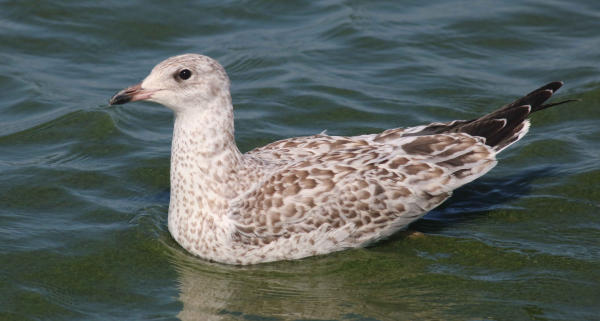
 A fledgling Ring-billed Gull.
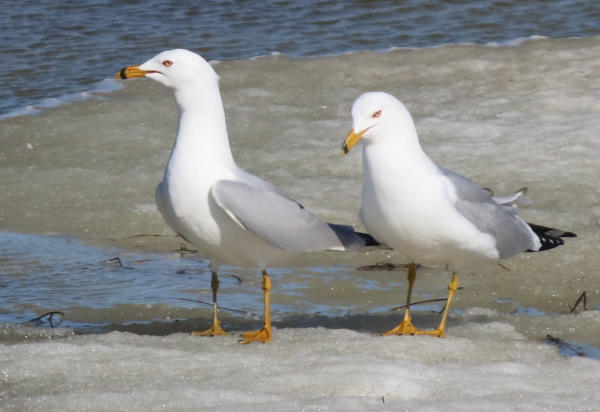 A pair of displaying Ring-billed Gulls. |
When most people go to the beach, they see “seagulls.” When birders go to the beach, they see Ring-billed Gulls, Herring Gulls, Western Gulls, Franklin’s Gulls, Laughing Gulls, California Gulls, Bonaparte’s Gulls – you know what I mean. You can see gulls along most of our waterways in the United States and Canada, and identifying different species of gulls is quite fun for most of us (a bit frustrating for some). One of the most widespread and common species of gulls are Ring-billed Gulls, but how much do you really know about Ring-billed Gulls?
Range: Throughout most of southern Canada and the United States. Winter along coasts and inland from the mid-continental United States south throughout Mexico.
Habitats: Primarily along watercourses including ocean coasts, rivers, lakes and marshes; also found in cities in parking lots and dumps.
Mating: Pairs are formed during winter and early spring.
Nest Sites: Nest in colonies on the ground on sandy or rocky isles in large inland lakes or among rocks on offshore rocky islets. Nests made of dry grass or other vegetation; often lined with feathers. Large colonies may include other species of gulls, and/or terns, cormorants and even some ducks.
Clutch Size: 2 to 5 buff-white eggs with brown markings.
Incubation Period: 21 days; adults share incubation.
Hatchling Period: hatchlings remain in the nest the first day, then become mobile and are fed and protected by both adults.
Fledging: About 3 weeks. Adult plumage attained during third year.
Food: A variety of foods including fish, aquatic invertebrates, large insects, earthworms, small mammals, bird eggs and hatchlings, and discarded human foods and organic waste.
Conservation Status: Common and becoming more abundant.