
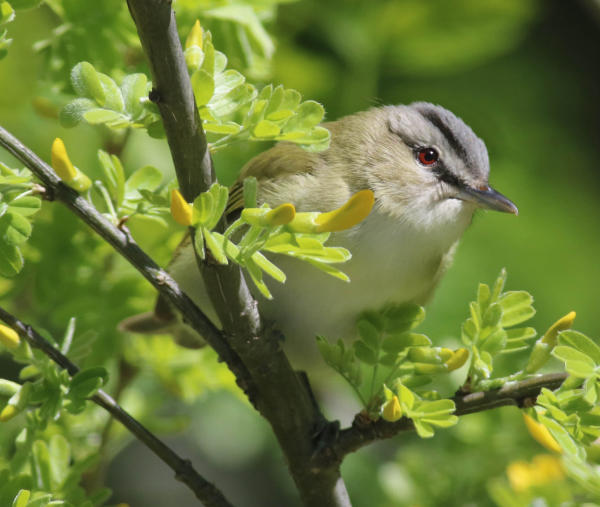
 Red-eyed Vireo 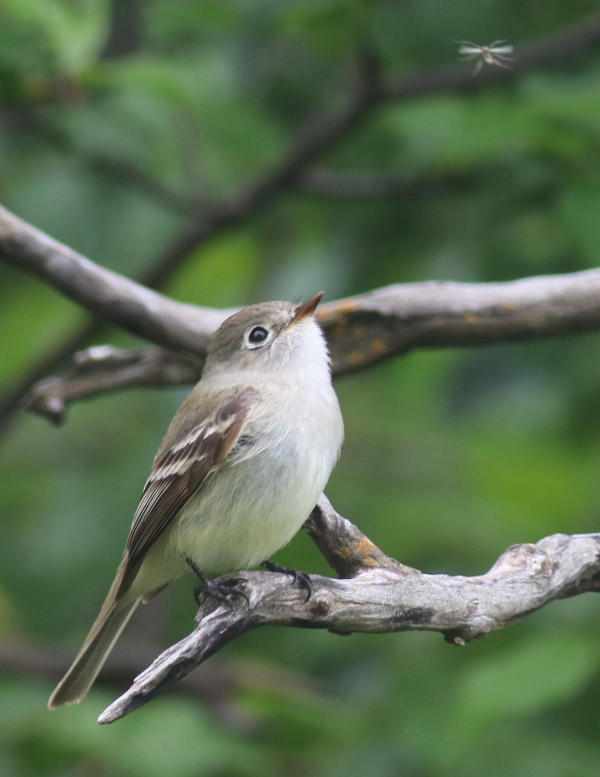 Least Flycatcher 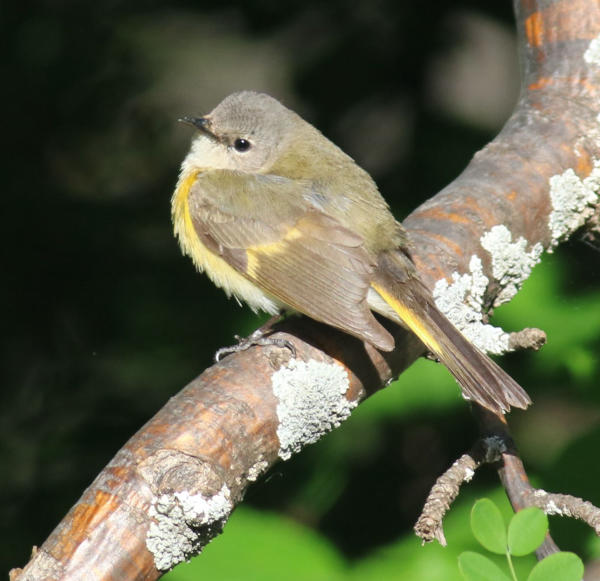 American Redstart female |
The fall migration of songbirds, flycatchers, swallows and other neotropical migrants has already begun. How have you faired so far photographing them? Many of these small birds migrate in loose flocks, some among mixed-species waves of migrants. They may only stop for a few minutes, a couple hours or a number of days, so you need to be in touch when they appear, and take advantage of them with your camera as long as they stay.
You may only get one chance at a given species this fall, but you may get several photo opportunities. Pick your spot, but be mobile. Songbirds often like to search for food among the foliage of tall trees, so you can help yourself by selecting a location where trees and bushes are not so tall, work the edges of habitat that tends to be lower, and ensure good natural light is coming from behind your position.
My favorite songbird and flycatcher hotspot is a multi-species grove of trees and bushes about a football field in length and 40 feet wide south of town. Planted in a north-south direction, this mature grove gets best light on the east side in the morning and on the west side during the afternoon. There, many species that spend their winter in the American tropics and nest in the boreal forest of Canada linger, including warblers, vireos, orioles, thrushes, wrens, thrashers, sparrows and grosbeaks, plus flycatchers, kingbirds and swallows – these birds provide a lot of photo action on certain days.
I have walked along the edges of the grove with my camera in hand, and that proved pretty successful. But I found that I have even better success when I photograph from a blind. As you know, I’m a big believer in using my vehicle as a mobile blind with great success and enjoyment. A vehicle provides a more elevated platform to photograph from, and you can pull ahead or reverse your position when action wanes in one location and looks good a hundred feet away. A vehicle also provides an appreciated level of comfort during extended photo periods.
Even after you have located a migration hotspot for fall migrants, photographing songbirds and flycatcher is trying, but that’s part of the excitement, and most of the challenge. All birds are very mobile, and warblers and vireos in particular are small fast-moving colorful songbirds that offer photographers an extreme challenge. Rarely do these little dynamos hold still for more than the tick of a second hand; they seem to be always on the move, searching for the next bug with a seemingly random direction; twisting, turning, stretching, dipping, hopping, flying. It’s exciting action to try to record in ample sunshine among leaves and branches and twigs.
Other songbirds may not be as small or as quick, but they tend to be a bit warier, such as orioles, thrushes, thrashers and others. Getting one good photo of these birds is very hard; besting that image and adding others is equally difficult, unless you get that an “ambassador” of its species that gives you special photo opportunities.
Some mornings it’s clear that several species of songbirds arrived overnight, and there is a progression of different species that migrate into the area (and out) day by day and week by week throughout August and early September. During late summer, many songbirds have molted into their less colorful alternate plumage, and many fledglings and birds of the year are also less colorful, but they offer seasonal photo opportunities to document their plumage changes. If you’re really lucky, you may get the opportunity to photograph a tanager or oriole that’s in mid-molt with a mixture of spring and fall colors. (I’m still waiting for that opportunity.)
Songbirds are exciting to watch and testing to photograph as they suddenly appear among the foliage, zipping and zapping and herking and jerking their way through the leaves and branches toward my position while I try to keep up with their erratic advances through my telephoto lens, straining to keep the lens focused on the tiny moving birds. Ah, the thrills of songbird photography!
One thing is for sure, when reviewing and editing my photos of these little dynamos, I am amazed at the technical quality of the images: The sharpness and detail of individual feathers, eyes, eyelids, feet and beak – it’s amazing to see the improvements in the photographs produced by our ever-improving digital photography equipment!
Article and photos by Paul Konrad
Share your photo tips and favorite photographs at editorsbtw2@gmail.com