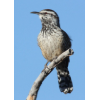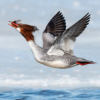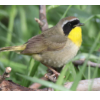
Most Birding Festivals held across the United States and Canada have a long and successful track record, with some continuing for more than 2 decades and a few prospering more than 4 decades! Each year, new communities and interested groups continue to start their own Birding Festivals to serve local and state birders, while also engaging the community. It seems that birding fests are destined to grow year after year with local citizens, businesses, and wildlife groups finding a sense of community in the events, while visiting birders generate impressive economic benefits.
Birding News 2
Celebrate the arrival of your favorite birds this spring and learn answers to common questions about how they make the migration from wintering areas to your neighborhood tomorrow, May 14th, presented by ornithologists from the Cornell Lab of Ornithology. This is a reminder to register for this informative presentation that emphasizes that bird migration isn't just a continental phenomenon, it is also super-local, and it is happening all around you now. Mid-May is prime time to enjoy the spring migration spectacle! Some of the new birds you see are just passing through during a short migration stopover, while others will be with you through the summer.
As we enter the most active period of bird migration, you can check live migration maps and other valuable information provided by BirdCast across the contiguous United States. This daily information is filed to be available to refer to anytime for any given night or day – and it's all free and available online 24-7. Using weather radar to detect the numbers and flight directions of migrating birds, BirdCast provides information to birders in a number of different ways, most notably on their Live Migration Map and Local Migration Dashboard. There are also 2 migration forecasting programs: Migration Forecasts and Migration Alerts, both of which look 3 days into the future.
Just as the spring migration of warblers is beginning, you can download and print a free full-color Warbler Identification Guide from the Bird Academy. Warblers can be among the most challenging birds to identify due to varied plumage colors and patterns between species, sexes, age groups, and the seasons, so this timely guide provides a source of information that will improve your warbler ID IQ. There are actually 3 pages of warbles included in this excellent Warbler ID Guide, divided into Eastern, Western, and Widespread Warblers found in the United States and Canada. Print the .pdf pages and study them at home and take them with you in the field.
How do you choose just one birding festival out of this list of remarkable opportunities for birders to enjoy some social birding at a Birding Festival? May could be named Birding Festival month considering all the birding festivals available for people to attend across the United States and Canada. Each birding festival is different, but they are all created with opportunities for experienced and novice birders in mind. There is truly so much to enjoy during Birding Festival events, such as guided field trips, family friendly activities, informative workshops and presentations, photo-oriented birding trips, featured speakers, a birding marketplace, art exhibits, and other attractions.
Adjacent to the Lake Erie Marsh Area in northwest Ohio is an area known as the "Warbler Capitol of the World," which offers some of the most intense and enjoyable spring songbird migration experiences in North America! The Biggest Week in American Birding will take place May 8 to 17 to celebrate the peak of spring songbird migration during 10 days of birding events and activities hosted by the Black Swamp Bird Observatory. During this period the Magee Marsh Wildlife Area stands as one of the best birding destinations, and it is bordered by Ottawa National Wildlife Refuge and Oak Harbor – and admission is Free!
While birding this spring, be sure to look for bands on the birds you observe. Although a very small percentage of birds we observe are banded, if you do see a banded bird, especially a bird with colored bands, try to record all the information you can – and start by taking a photograph of the bird and its band(s). Bird banding has provided a wealth of information about the birds of North America and beyond, and while biologists can use much more sophisticated methods of monitoring bird migrations and behavior in the form of telemetry, bird bands continue to provide new and interesting information.
An apparent breakthrough that should be instrumental in protecting birds from crashing into windows and tall buildings when migrating at night. Photometrics AI, a street-lighting optimization company, is now using bird migration forecasts as part of its lighting management platform. Cities can now use the Photometrics AI platform, which provides an automated feature that dims lights when information from the Cornell Lab of Ornithology's BirdCast bird migration monitoring system signals a big migration night that poses high risks for bird-window collisions. Their new AI technology helps to protect birds by automatically dimming lights when it matters most.
The Great Texas Birding Classic is celebrating 30 years of birding, conservation, and friendly competition, and you are invited to be part of this milestone event – pick your date or dates between April 15 and May 15. Organized by the Texas Parks and Wildlife Department, the Birding Classic offers several tournament categories for all ages, abilities, and experience levels of birders to participate. You can choose to be birding in your yard, at a favorite state park, or during an all-out statewide adventure.
It turns out that if you are an advanced birder, your interest and activities in birding appear to alter the structure and function of your brain in ways that may enhance cognition – the mental process of acquiring knowledge and understanding through thought, experience, and the senses – even as you age. According to a new research study, seasoned birders had denser tissue in parts of the brain associated to attention and perception. Such tissue density may indicate increased communication between neurons, and these structural differences were associated with more accurate bird identification.
Each year, thousands of people gather on ridges, coasts, and other lookouts at raptor concentration points across North America and around the world to watch migrating hawks, eagles, falcons, and kites as they pass by during spring and fall. The awe-inspiring spectacles spark a curiosity and provide a fun and accessible point of entry to birding and in-flight identification to the public, while also helping us all better understand raptor movements, migration dynamics, and population trends. All this with the Hawk Migration Association at the forefront of providing daily count information, research reports, and conservation insights within an open, united group.
The annual Audubon Bird Photography Awards contest is open for entries in 8 categories, and if you take videos of birds, there is a Video category for your best production too. You have until noon EST next Wednesday, March 4th to enter your photos or videos, so be sure to get your entries in pronto! Having alerted readers to this prestigious photo competition in the January 28 issue of The Birding Wire, it's getting down to the wire. Judges will score photographs and videos on their technical quality, originality, and artistic merit (1/3 each). Significant cash prizes will be awarded to the winners in 7 categories.
March is Sandhill Crane month along the Platte River in central Nebraska as hundreds of thousands of Sandhills add their voices to the valley. The annual spring stopover concentration of Sandhill Cranes becomes the largest assemblage of cranes anywhere in the world, which attracts people nationwide to witness the morning and evening flights of cranes along the Platte River and observe flocks feeding in adjacent harvested ag fields. It's a compelling experience, and beginning the first week of March, the Audubon Center at the Rowe Sanctuary in the Platte River Valley near the city of Kearny will begin providing a variety of opportunities for birders to join guided tours including photo tours, and to visit the Center.
Young Birders Alert: The Cornell Lab will be hosting the annual Young Birders Event this June 25 thru 28th in Ithaca, New York. If you are a high school student interested in pursuing a career that connects with birds, this event is for you, and the application deadline is March 8th. This 4-day event is held at the Cornell Lab of Ornithology, which is staffed by a variety of professionals who all work with birds in different ways: As bird biologists, ecologists, artists, communicators, educators, audio specialists, computer scientists, app designers, and more.
Taxonomists just completed creating the most updated version of the "Bird Family Tree" that includes all recognized 11,167 bird species! You can refer to the new illustrated Phylogeny Explorer to see the connections between different birds you encounter and others that interest you. Understanding bird systematics and the connections between different birds and bird families is an interesting part of becoming a better birder, and now Birds of the World provides a way for users to trace any bird's lineage, compare species relationships, and explore major evolutionary milestones with a click of a button online.
Biologists who have been tracking Bald Eagles that fledged from nests in Arizona found that most migrate north after the nesting season, sometimes extending their movements into southwest Canada during summer and fall. Rather than making a southbound post-nesting migration used by most migratory birds, the Arizona population of Bald Eagles showed they follow northbound routes where the young eagles made stopovers at lakes and rivers. These discoveries point to the need for targeted conservation of critical travel corridors and feeding areas beyond Arizona nesting territories.
Saturday January 31st, the Superbowl of Birding will bring birding teams together to compete in a 12-hour race to find as many bird species as possible on the coldest day of the year (maybe). Centered at Mass Audubon's Joppa Flats Sanctuary, this friendly competition fosters the joys of winter birding and being outdoors while raising awareness about the importance of bird habitats along the Massachusetts North Shore and surrounding areas. All ages and levels of experience are welcome to participate in the Superbowl of Birding.
With more than 550 Whooping Cranes wintering along the Texas Gulf Coast centered at Aransas National Wildlife Refuge, the best way to get close to some of the rare and majestic Whooping Cranes is to join Captain Tommy on the cruise ship Skimmer. Whooping Crane & Coastal Birding Cruises depart regularly from Rockport, Texas, on 3-hour waterborne birding adventures that cruise into prime Whooping Crane viewing and photography areas, and you have a chance to see 30 to 60 different species of birds and other wildlife during the trip.
For the Cornell Lab of Ornithology, 2025 marked another extraordinary year for eBird, Merlin, Macaulay Library, and Birds of the World. As the birding community reached incredible milestones in worldwide participation, engagement, and conservation data gathering, the Lab provided enhanced tools and expanded content to unprecedented numbers of people around the world. By connecting people to birds, more people entered the birding world than ever before, including 140,000 first-time eBird users and 9.6 million new Merlin users!
As we begin a new year of exciting birding events, Birding Festivals are a great opportunity to learn more about the variety of birds and their varied surroundings at a given location, while connecting with others interested in birds and birding. During January there are 12 birding festivals from Alabama to Arizona and California to Florida, and 5 of them feature wintering Bald Eagle populations. Even so, every birding festival is different, but all provide activities with novice and experienced birders in mind including a variety of exciting events – and along the way you are sure to learn more about how to be a better birder.