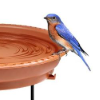
Access to fresh water will attract the greatest diversity of birds to your feeding station, adding appreciably to your birding experiences, and benefitting birds by providing easy access to ice-free water for drinking and bathing during the cold weather ahead. Providing winter water is actually pretty simple, and even in the most northern areas, a single piece of equipment is all you need: A heated birdbath is an important part of providing a top-notch feeding station that includes ice-free water for winter birds.
Celestron has opened applications for the 2026 Celestron Binocular Grant for educators across the United States, in which 15 educators will be selected to receive 10 binoculars to enrich students' learning experiences – from observing birds and other wildlife to engaging in participatory science projects, such as Project FeederWatch, the Global Big Day, and other birding events. Teachers and other educators are encouraged to apply by sharing your ideas for how a set of 10 high-quality binoculars can help engage students of any age.
Each spring and fall, millions of raptors sweep across the sky in a breathtaking display of migration. As many birds of prey cross borders and traverse continents, they navigate a rapidly changing world. Though they fly freely above, below them is a united network of thousands of specialized birders – hawkwatchers and biologists across the Americas, transforming observations and raptor counts into powerful conservation data that is used to better understand and protect birds of prey. At the center of this effort is the Hawk Migration Association.
Waterfowl continue to dominate the avian realm surrounding my office, first peaking a week ago Monday when thousands of geese were feeding immediately southwest of my desk. Potentially reaching 10,000 Snow Geese with a relatively high percentage of Ross's Geese mixed among the Snows, there were a few scattered flocks of White-fronted Geese too. The northeast edge of the massive concentration of geese expanded to within 200 yards southwest of my bay windows. A few hours later, most of those geese flew the short distance to Melody's Marsh, where geese covered the water surface and eventually half of those geese transferred to the adjacent prairie to graze, and that's when I enjoyed time photographing ½ mile south of home.
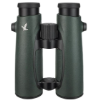
Swarovski has long been respected by birders for the superior quality optics that provide the sharpest views of birds and anything that comes into view. The Swarovski EL 8.5x42 Binoculars are designed with slightly higher magnification at 8.5x, without sacrificing their wide field of view of 400 feet at 1,000 yards. The EL Binoculars are fully equipped with Swarovision technology that features fluoride glass that improves color quality and resolution. The optical system also features phase-coated BaK-4 prisms that provide 91 percent light transmission.
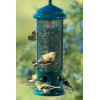
Featuring proven squirrel-proof technology, the Squirrel Buster Standard Feeder & Legacy Feeder look good, work great, and actually save you money when they keep squirrels from accessing bird seeds, without harming the rodents in any way. The Squirrel Buster Standard Feeder & Legacy Feeder differ mostly by offering different sizes of the same feeder type – a great option, with the Legacy being the larger model. The Standard Feeder holds 1¼ pounds of bird seeds, and the Legacy Feeder holds twice that amount: 2½ pounds of seeds, so you can choose the feeder that best fits into your bird feeding plans.
RBA apparel is designed by birders, for birders. Take advantage of the Black Friday/Cyber Monday Sale at Raven Birding Apparel, featuring the exclusive artwork of Raven Originals (original designs inspired by birds and wild places) and the Raven Performance series (performance apparel built for everyday birding). Explore artist-designed birding shirts, sun shirts, hoodies, midweights, and field caps – all with your choice of distinctive artwork. RBA combines artwork on quality clothing that provides the comfort, sun protection, and performance that Raven is built around and birders appreciate.
With 13 First Records established so far this month, among many standouts was the First State Record of a Pacific Swift in North Carolina, a Gray Heron in New Hampshire, Eastern Bluebirds in California and Nevada, and Calliope Hummingbirds in Delaware and Illinois – plus Illinois had First State Records of 2 other hummingbird species, a Buff-bellied Hummingbird and a Black-chinned Hummingbird. There was also a First State Record Vermilion Flycatcher in Connecticut and a First Provincial Record Hammond's Flycatcher in Ontario; and that's the short list of many more rare bird records reported here.
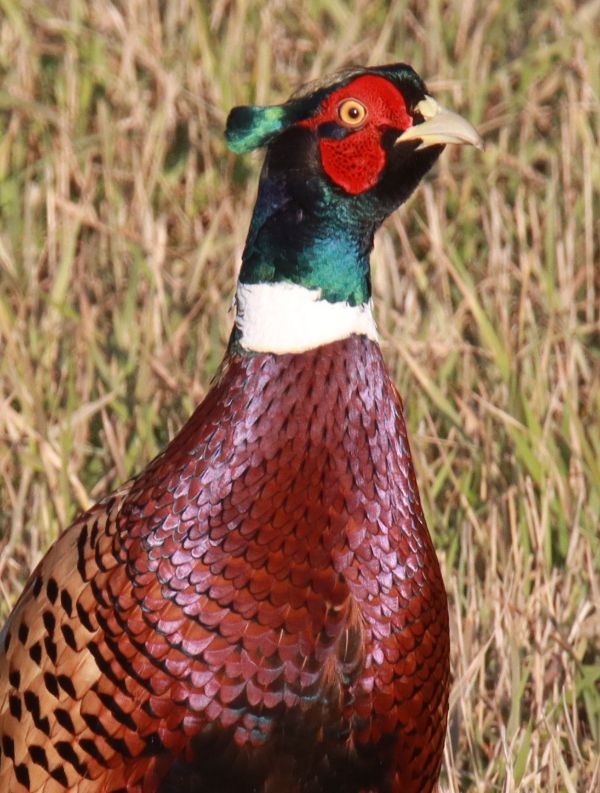
With its full attention focused on the sound of my camera, the Ring-necked Pheasant was instantly in display mode, such as you would see during spring, all with afternoon sunlight illuminating its iridescent plumage (600mm zoom lens, f-10 aperture, 1/640 shutter speed, 800 ISO).
One of the most exciting aspects of bird photography is to find a bird or birds that may potentially provide a photo opportunity – momentary or extended as the interaction plays out. Some birds are flighty, dodging behind cover, taking flight, or diving below water. But every so often you find a “species ambassador” that provides an ultimate bird photography experience. After spending about a half-hour photographing 3 species of geese along a “flyway” where flocks of Snow Geese, Ross’s Geese, and White-fronted Geese were flying from one feeding field across a lake to another field a bit more than a mile northwest of my office, my mind was on waterfowl. But after a half-mile of driving toward home, the outline of a colorful male Ring-necked Pheasant bathed in bright afternoon sunlight suddenly caught my attention near the east side of the road.
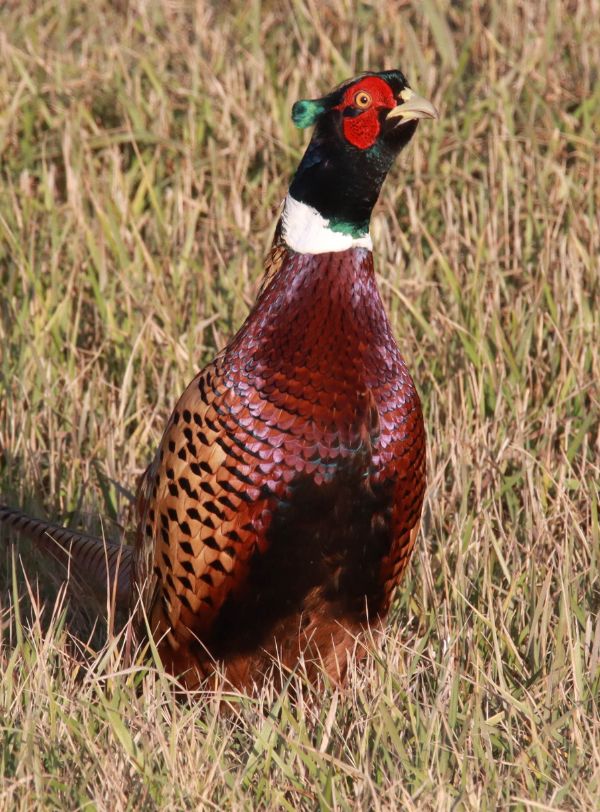
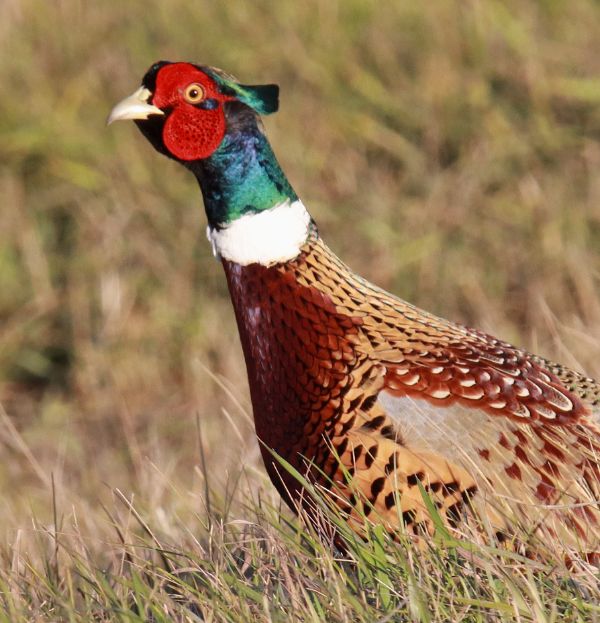
Adding its voice to begin interactions that surprised and thrilled me, the colorful male stretched its neck as it called in response to the camera's clicks (600mm zoom lens, f-10 aperture, 1/800 shutter speed).
Photographing pheasants during this time of fall is all but impossible because they are especially wary and prone to flush immediately when they see any movement. But this pheasant held its ground with its head held high, even as I slowed and stopped my mobile blind (car) and took the first couple photos – a big plus already considering how pheasants usually react by fleeing on foot or in the air. With its wonderful variety of iridescent colors beaming and its ear tufts extended and red facial skin expanded, this exceptional bird seemed more interested in showing off than fleeing. In response, I took full advantage of this impromptu photo opportunity – but that’s not all.
As my camera’s shutter clicked with each photo I took, the perky pheasant called – my camera clicked and the pheasant clucked back and forth! This was unheard of in my expansive realm of pheasant lore, but this interchange continued with each click of my camera’s shutter. The pheasant became more enthusiastic, and I thought he might burst into a full crowing performance any second. Some moments I even took a photo especially to keep the pheasant excited and to try to get him to take the next step: to raise and spread his tail, flap his wings, and stretch his neck ahead as he emitted a full-on crowing call. And while that episode came close to happening, the excited pheasant only elevated to the point of a more enthusiastic cluck – or was it more of a clack or tuk sound.
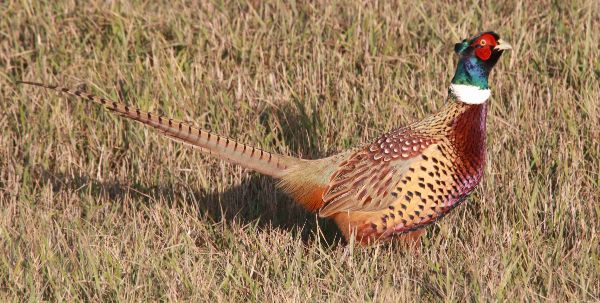
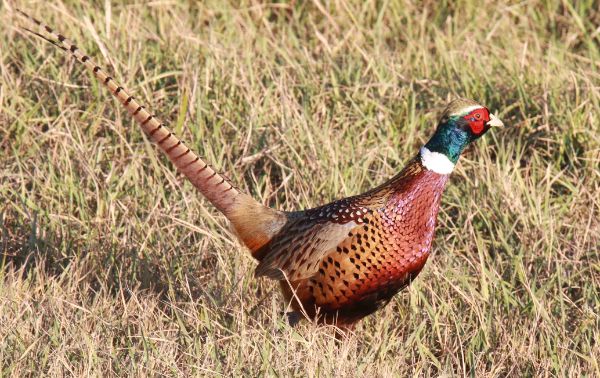
As it turned broadside, the pheasant went into full display mode, showing the long tail feathers of a mature adult while continuing to react to each click of the camera's shutter (600mm zoom lens, f-10 aperture, 1/800 shutter speed, 800 ISO).
Throughout this one-on-one episode, the pheasant was facing me directly, merely turning its head one way or the other at times, or tilting its head up a bit as it made its one-syllable calls. But at the peak of our interactions, the big pheasant turned and raised its especially long tail in a bit of a strut, and as I took a series of photos, the big male showed his greatest enthusiasm and stretched his neck and head forward as he almost crowed, but produced his best cluucck in the process! Perhaps that was his exclamation mark or grand finale, as he suddenly took flight, probably resuming his intended transfer to the edge of the harvested cornfield to feed near where thousands of geese were massed.
Just short of a much anticipated full crowing display, the enchanted Ring-neck shows its highest level of excitement (600mm zoom lens, f-10 aperture, 1/1000 shutter speed, 800 ISO).
WoW! That was certainly an unexpected photo op, but much more, it was a surprise opportunity to make something of a connection with a very spectacular bird that not only permitted me to stop nearby and take some photographs in the beaming sunlight, but the pheasant actually made something of a connection with me – or at least with my camera and its big cyclops eye of a lens that showed from the window of my white car. While birding is filled with unexpected finds and surprise sightings, there is no question that one of the most rewarding aspects of bird photography transpires when a bird accepts you, then seems to make something of a connection through nature’s enchantment. What a thrill it was to spend these considerable moments with a true Dakota peacock – a magnificent Ring-necked Pheasant!
Take Two!! The above paragraphs would normally be the end of the story, but not this time: Same time, same place, after photographing geese in flight on the edge a feeding flock of several thousand, I was headed back home and darned if there wasn’t a cock pheasant in almost the same position beside the road at 24 hours earlier. But wait, there were 2 male Ring-necked Pheasants, likely interacting and a bit buzzed with adrenaline! The first one provided 7 photos, again reacting to the clicks of my camera by clucking single notes in return before taking flight to feed near the flock of thousands of geese.
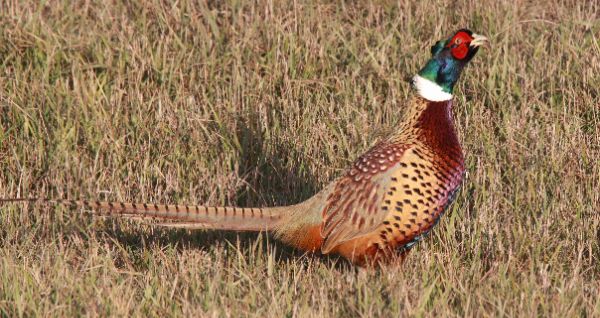
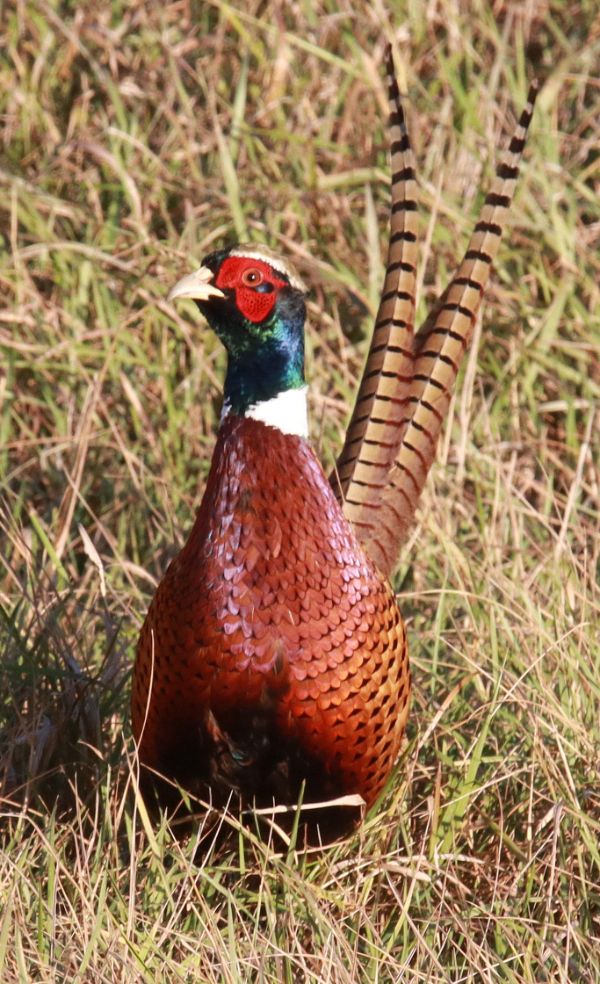
The following afternoon, in the same location, the first of 2 male Ring-necked Pheasants trusted my approach and also clucked in reaction to the clicking shutter. This image can be counted among my favorite photos of this wary species (450mm zoom lens, f-13 aperture, 1/400 shutter speed, 800 ISO).
That’s when I gingerly drove forward with the hope the second pheasant would permit me to position my car in optimum sunlight – and he did. He was in a rather relaxed, somewhat crouched position when I took the first 2 photographs. That’s when he took a more upright stance on the edge of tall grass, and standing broadside he too reacted with a cluck as I snapped each camera click, but he also did something even more surprising. He promptly began walking my way, first turning to face me, raising his long tail feathers in the process; then walking down the little hill straight toward my position – clucking as I took each photo. When he first turned my way and raised his tail, I thought he might crow at the top of the mound, and as he walked toward me with purpose, I was sure a crowing display was eminent.
During the second afternoon's photo session, I unintentionally had my aperture set at f-13 rather than f-10 or f-8, which created pretty slow shutter speeds. However, the resulting behavior of the pheasants and the excitement of having interactive photo sessions with 2 prairie peacocks was especially memorable (450mm zoom lens, f-13 aperture, 1/250 shutter speed, 800 ISO).
That’s when I checked my rearview mirror and saw a giant semitruck barreling straight at me, likely filled with a quarter-million dollars of harvested corn. It was still a half-mile away, so I had a few more moments to spare and returned to the big boy as he stepped closer, only 20 feet away now. I hurried to take a couple quick photos, then realized I better speed away, which I did with haste! Too bad though, it would have been interesting to see what this very energized prairie peacock would have ultimately done, and how close it would have approached. After my hasty takeoff and the loud intense passing of the massive semitruck, I looked in my side mirror and saw the plunky pheasant hadn’t wavered and was still on guard.
With each click of my camera, the second pheasant called and stepped ever closer with its tail raised in display (450mm zoom lens, f-13 aperture, 1/320 shutter speed, 800 ISO).
Of course, I had to return, so after turning onto a side road and letting the big truck roar by, I turned my car around and headed back toward the pheasant. As I approached, the pheasant was standing on the roadside, and even before I began to brake it bent forward and ran across the road before me. That, of course, begged the question: Why did the pheasant cross the road, right? In hindsight, considering that Ring-necked Pheasants are pretty territorial, I’m sure one of the birds was the same pheasant I interacted with the previous afternoon. A comparison of the white neck collar of feathers didn’t seem to be decisive, but because the first bird had its iridescent green ear tufts erect, I would bet he was the initial clucker, considering that the second pheasant never raised a feather on its head – even though it seemed to be even more excited by the clicking camera I’d say he was a new photo subject.
Even so, it’s interesting to see how both of the cocky males reacted to the sounds of my camera, and I don’t think I’ve ever had a pheasant communicate with me (or my camera) before. And very few pheasants have been so trusting; both of these colorful Ring-necked Pheasants were true species ambassadors, providing some classic photographs to share with tens of thousands of people in this publication and others I will share some images with. One more question: Would one or both of these impressive birds continue to be excitable cluckers? You know I checked back about 3:30 the following days – just ¾ of a mile north of The Birding Wire office in south-central North Dakota. Enjoy these late fall days of birding with your camera as flocks of birds arrive, pass by, and continue to thrill us all!